Carly Clark: Today, we're speaking with Sherry Scheline about her work with Dirt Camp. To start our conversation, can you tell us a little bit about your role and the organization you represent?
Sherry Scheline: Yes, I am a director at a very small library in Idaho called the Donnelly Public Library. Our town populace is around two hundred and fifty, but our service population is around thirty one hundred, so we're very small. Our annual budget is eighty thousand, so we don't have a lot of money, and we're very tiny.
Carly Clark: Okay. That's awesome. Well, thank you for sharing that. And can you kind of provide us with a mental view of your learning space or your library and then the community of learners within it?
Sherry Scheline: Yes. So, around COVID time, we did a survey of our community, and we were having a childcare crisis at the time, and most of our community wanted after-school programming. There were no options in Valley County. And so we created an after-school program. And our occupancy at our library is only sixteen, so that forced us to have our program primarily outside. So we created kind of an outside space. We purchased the lot next to the library and created kind of like a campus space. Obviously we want to expand the library and are just waiting for some monetary contributions, if you will, but we did an after-school program outside, and the school was under construction that year, so there was no space in the school for us to use. So we implemented our program outside, and in 2022 we continued that outside programming to meet some COVID needs, and we just developed a really strong after-school program. And, unlike most libraries, it's all free programming. We did start charging. So we charged a tuition, and then we run an after-school program Monday through Friday from three o'clock till six o'clock. And then in the summer we run something called Camp Library, and Camp Library runs from eight in the morning until six at night. And it's a tuition-based program too. And obviously there's lots of scholarships available. And we still serve that purpose of libraries, or for all — we make sure that if a child is in need, we serve that child. So yeah, we run camp all summer long for ten weeks.
Carly Clark: That's amazing. Wow. That is what . . .
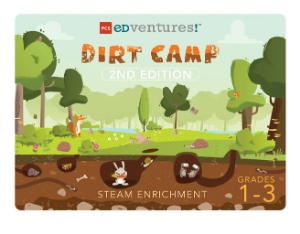
Sherry Scheline: Our little library does. So I also participate at the school. So the reason that my most recent Dirt Camp — I'm explaining this because my most recent Dirt Camp pictures on social media were actually not at the library. They were at the school. So, I'm going to clarify that, so that you're not like, "Oh, wait, what?" Our school does something called PACE. PACE is a rewards program that the kids get if they have met all of their academic goals throughout the week, and social goals too. Like, if a child's misbehaving, they don't get to go to PACE. So teachers can use it as a moment of consequence, if you will, but it's also just a rewards-based program for completion of work throughout the week. So, if a teacher has a reading goal that the kids have to meet or a math goal, then their reward is PACE on Fridays, and the whole school participates in it. And the teachers formulate between three and five PACE centers. And so you can do things like extra recess, music lab — which is you get to go into the music room and play all the instruments — or there's a dance-a-thon in the gym, or an outside scavenger hunt. So different teachers plan different things. It also gives some of the teachers that planning time that they desperately need at the end of the week. So PACE is an hour's time period on Friday afternoon, and I come in, and I call them a fun learning activity, but I teach PACE on Fridays at the school. So there's one hundred and seventy-four students, and the kids get to choose. They all can't choose Miss Sherry's class. They have to divvy up. So this last Friday I did Dirt Camp, and I had a packed session. I mean, they're choosing Dirt Camp over things like a dance party, extra recess, and gym time and things like that. I mean, these are reward things, fun things. And so it's not meant to be an hour where I teach. It's meant to be an hour where they have fun. And so I try to make whatever I'm doing super rewarding, and I curate whatever I'm doing to pack down to that hour of fun. So, PCS Edventures-wise, I do Rockin' Robots all the time. They love Rockin' Robots. I did BrickLAB, Dirt Camp, and every kit is twelve one-hour programs, but I only get one hour. And I could totally do one hour for twelve weeks if I wanted, but I try to mix it up. So I'm condensing something down into one hour of program from my kits. I took the first three lessons of Dirt Camp and laid them out, and so that's what I did with Dirt Camp last week, but it's the same kit. It's very little planning time on my behalf. It's literally: I have the kit, I pick the tubs up, I bring them to the school, which is clear across town. I unload the tubs. I set up a table outside because it was dirt, and I didn't want to get this inside messy. So yeah, I did Dirt Camp last Friday at the school. So I have our program here, but I also have PACE at the school. So it was in a school setting, and the kids loved every moment of it.
Carly Clark: Wow, I wish we had PACE when I was a teacher. That sounds so amazing. Mhm.
Sherry Scheline: And I do think it was super funny because, in the line afterwards, in the pickup line for kids, the kids were like, "I'm coming to Dirt Camp next week. I'm coming to Dirt Camp next week." Well, unfortunately, I'm not there this week because I have a wedding I have to go to. Usually I'll do Rockin' Robots times two, but I'm not doing Dirt Camp times two. So they don't get Dirt Camp again. And so some of the kids are like super bummed. They're like, "You're not gonna be at Dirt Camp." I'm like, "No." And so I don't know if I'm going to have to redo it in May, because they don't have a PACE — because we don't have school one Friday in April. So I'm down to two more PACEs. And so I really can't squeeze another Dirt Camp in there because I have to start marketing for summer reading program. And so I have a dinosaur dig — the next two dinosaur digs — not as easy as Dirt Camp because Dirt Camp is in the kit. That's the problem is when I have to formulate my own kits, when I have to do my own lesson at PACE — it's painful for me because I have to get online, because it's not like I have a store I can go by. So, my dinosaur dig, I'm searching online, which is my least favorite thing to do. I prefer the kits, the grab-and-goes, because then I have to make a shopping list. And then what if I don't have enough stuff? But usually I love the kits because everything is just: I grab it out of our storage, I put it in my car, I drive it over to the school, I pull it out, and it is like ready to go.
Carly Clark: Yeah, that is honestly amazing because, you know, when I was a teacher, we would get all the curriculum, and it comes with everything. But if you don't have that, you do have to basically recreate the wheel. You know, you have to create everything. And, and then I did worry sometimes — I mean, I still had to go out and get things. Did I grab everything? Did I miss something? And then, if you start prepping, and it's like that day, that lesson, and you miss that really important thing, it just throws your whole day off and the whole lesson off. So it is very nice that everything is right there, ready to go.
Sherry Scheline: It's super nice. And then even the content list is like right there in the teacher manual, so you can see everything, and you're like, "Oh, did I use that last time that I did this?" Since I've used these kits over and over and over, the replenishing thing is really nice, because — also the replenishing — I've gotten to a habit of doing this when I'm doing it, using it for my after-school program or Camp Library. I laminate the sheets that have the contents on it, and if I run through something, I just take the Expo and I circle whatever I used up, and then I can order it and replenish my kit and have plenty of time, where I'm not scatterbrained, because we have to order everything. Our grocery store and stuff does not have a lot of the stuff we need. My town has no grocery store. We have a Stinker station, which is a gas station, and we have a few restaurants. So if I'm out of aluminum foil, then I'll go to the bar, Cougar Dave's, and get aluminum foil. But if I run out of something, I'm out — it is an hour of my day just to drive to and from. So the kits are super, super important for my small and rural space, because I just don't have stuff, and I don't have a store to go to. Yeah.
Carly Clark: You don't have access to the stuff. Yeah. So. Wow.
Sherry Scheline: So I have gotten better about — I laminate the sheet, and then I expo-circle what I used. And obviously you don't use up all of your stuff the first go, even if you have thirty kids. But I've been better about that.
Carly Clark: Well, that's a really good tip that you just shared about laminating and then circling what you need to replenish. A lot of people have probably not thought about that just yet. Keep that sheet, circle what you used, and then you know exactly what you use for next time. That's genius.
Sherry Scheline: So during the summer, for our camp, we had a certified teacher. Her name is Miss Cindy, and if I could pay her what she is worth, the library would be broke. She's so incredible — she is just unbelievable. But Miss Cindy would use the kit, and so she was the one who came up with this idea — so she could tell me, because that's the other thing: she packages a kit up at the end of the day, and then I don't know. So she was the one that came up with this idea that we — we put it on top of the box. It also helps me to know what's in each box, because there's a laminated thing that's taped down on the top.
Carly Clark: That's a great system.
Sherry Scheline: Some of the stuff I have to order from PCS Edventures direct, and then some of it I can just grab when I'm in Boise at the grocery store.
Carly Clark: Mhm. Well, yeah, great idea. Maybe some people have thought of of that, but not too many, so would love to share that. So, if you were asked what a learner is gaining from these kits beyond the STEM acronym — science, technology, engineering, math — what would you say?
Sherry Scheline: Well, for me, I always try to instill in children the love for a library. You're doing yourself a favor, because if they can love the library, you're creating a lifelong learner. And so I think making things fun is super important, because then you're instilling this love of place, and that love of place becomes that love of thought. I hope that all of our kids that come through — whether it's at PACE at the school, or our summer, our Camp Library, or our after-school program — I hope every single one of those children go away with, "I love my library, and I love Miss Sherry, the librarian," or "I love Miss Cindy, my teacher at the library." I hope that our kids leave with that instilled in them, because I think that instilling of that is what creates lifelong learners. So I think that that's super important. Each kit has some fun components. So, in the Dirt Camp, the first day you're making a mud shake — you're mixing these ingredients together, and then it is a mud shake. The kids had fun, and then they talk about whether or not they can drink it, how does it smell, and then there's a sheet in the journal that's like touch, smell. And the kids are using all five of their senses because they're having fun, and they're enjoying this moment, and what they'll go away is not that they learned about trace minerals and how much salt is in trace minerals, or that clay can be dry and flaky, and it's not just what we think of as clay, which is moist, and they don't go away with just those little facts that they've learned — they go away with this joy, and they're running off to tell their friends about it, and they're running off to tell their teachers. That's what I love, is they go tell their teachers little nuggets that they learned. But the reason they're telling those little nuggets is because they had fun. They're not telling those little nuggets because it was just a boring class. They're telling the little nuggets that they learned because they had fun, and they'll remember that. And then they go away knowing that Miss Sherry's fun. And so I think that, in addition to the learning aspects of Dirt Dirt Camp specifically, I think it's just instilling that joy of place. So I think for that, that's the one thing I would say, is that just instilling that love of libraries, because that's how you create lifelong learners.
Carly Clark: Thank you for what you do. I can tell you are so passionate, and I think that's just — it's radiating from you. So I'm sure those kids feel it every time they meet you and they're with you.
Sherry Scheline: So I hope they do.
Carly Clark: They do. So, the other question I was going to ask is to the educator listening who is hesitant to try one more thing because their plate is already full. Why is Dirt Camp the one thing that's worth the space?
Sherry Scheline: It's all done for you. I think that that's — I, I always say that when I'm talking about a PCS Edventures kit — but I think the time you save in planning is worth its weight in gold. Your planning time is precious, and these kits, you just open the lid and it's ready to go. That's why I think educators should invest and take the jump. It has your standards in there, what goals you're going to meet — it's all laid out for you. And then the online assistants too — if you actually go into the classrooms and use your classroom code and get the help, it's perfection. They're super easy, and they eliminate all my planning. I'm not a good planner, anyway.
Carly Clark: I wasn't either. I was great at other things, but man, sitting down and doing that was tricky for me. Yeah, I like everything ready to go. Just tell me what to do, and I'll make it my own. Go ahead.
Sherry Scheline: Right. That's — that's my thing.
Carly Clark: Well, Sherry, thank you so much for sharing your journey with Dirt Camp. The work you're doing for your learners is very incredible, and we're so grateful to have your voice and insights as part of our STEM community. Thank you.
Sherry Scheline: Thank you.