Intro: Welcome to the PCS Edventures Educator Spotlight Series. In today's podcast, we meet Christina Landburg, a Gifted and Talented teacher in Carthage School District. She admits that she didn't know anything about flight and aerodynamics before diving into the program with her students. The result? A classroom of gifted learners who tested, failed, adjusted and tested again. They discovered that the scientific method isn't just a phrase in a textbook, but something they lived out with their own paper airplanes.
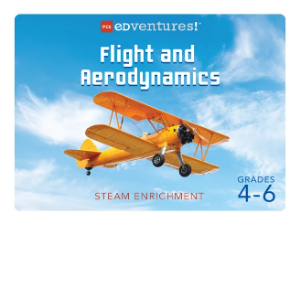
Carly Clark: Today, we're speaking with Christina Landburg about her work with our Flight and Aerodynamics program. To start our conversation, can you tell us a little bit about your role and the organization you represent?
Christina Landburg: I am a gifted and talented education teacher, so if you hear me say the word GATES, that's what we call our program. I teach second through fifth grade and ninth through twelfth grade. I used this program with my fourth and fifth grade students, in my GATES program and with four different classes while I was using it.
Carly Clark: Awesome. So you see quite a few different age groups, and you're working with a lot of different students in your day-to-day.
Christina Landburg: Yes. Yeah, my schedule is different every single day. And so the students that I see are different depending on the day, and also the length of time that I have them. So some grades I have for two and a half hours straight, and then other grades I only see for forty-five minutes at a time. So it makes it a very interesting day each day, to be able to kind of just go with the flow of whatever I'm doing. And these programs were really great because if I did have to stop somewhere, there were a lot of easy places to stop where we could just pick right back up the next day and not have to worry about being in the middle of something that I absolutely couldn't stop, because it wouldn't have worked for my schedule if so.
Carly Clark: That's awesome. So do you have a decent amount of prep time with all the different age groups that you're working with? I hope so.
Christina Landburg: No, I do not have much prep time at all. So it made my first couple of years of teaching gifted and talented very difficult, because I was spending hours and hours of my own time in the evenings and on the weekends trying to plan lessons and gather materials and things like that. Especially for the fact that a lot of my classes, I only have four to five minutes in between. And when I say I have four to five minutes in between, usually by the time I dismiss one set of students, the other set of students is already waiting at the door because teachers release a little bit earlier so they make it on time. And so that means I have to be ready to go immediately. I don't have time to put a bunch of things out and just completely reset. I have to be ready to go. And so this unit made it very nice because the materials could all be kept in the bucket. And I kind of just made it where my students had to collect the materials at the end of the day and put them back in the buckets that they got them out of. And so it helped with resource management and organization as well, just setting up those routines to where it made it easy to switch between classes and be able to use what I needed for each class, and then reset and use it again for the next class.
Carly Clark: I love all of your answers because it sounds like prep is kind of a struggle for you with all of the changing classes you have. And you kind of helped us understand a little bit about some of your pain points. And you had mentioned — you did that questionnaire. You said that you had some other pain points: prep and cleanup time was one, materials management, student participant engagement, scouting and vetting high-quality, reliable curriculum and aligning the activity with specific standards or learning goals. How did our Flight and Aerodynamics program alleviate some of those pain points for you? You mentioned a couple already.
Christina Landburg: So I'm finishing up my third year teaching GATES. And when I came into GATES, there was no curriculum. There were no resources left for me. And the few things that I had access to were not my teaching style. The teacher that I replaced — she was a very old-school teacher, and she did a great job with the students and really helped them think higher. But I am more technologically savvy, and I like more of the STEAM hands-on engagement things. And so really, I started with nothing. And especially those first couple of years of trying to piece together things that I had — I immediately came from teaching fourth grade, but I had taught third, fourth and fifth grade in the past. And so trying to use some of the resources I had, but then I also used a lot of my own money purchasing things off of Teachers Pay Teachers or just, you know, whatever, borrowing, begging, pleading to get those resources. And so it made it really nice. I actually didn't start with the Flight and Aerodynamics unit. The first unit I started with was the Oceanography, and I did that with third and fourth graders, and I loved it so much because of how easy it was for me to just pick up the teacher handbook, go grab the supplies out of the bucket. Luckily, my district purchased the one that included everything, so the copies were already there. I didn't have to go make copies, so when I didn't have a lot of time to plan or to prep, I knew that it was all there for me, and I could just go and pick it up. And it was one less stress on my plate of having to plan for that each week, when I knew that I had other things that I needed to plan for too. Once I did that and saw how easy it was to have that high-quality instruction, but also include the STEAM aspect of it. And it was very easy to adapt it to add in a little bit higher-level things for my students in the places that I needed to. Not everywhere did I need to, but there were a few places. I knew that I had to try some of the other units. I kind of asked my students — kind of surveyed them of what things they maybe would be interested in, and I actually used it based off of the PCS Edventure STEAM camp ones. But I also had to make sure that it was things that I was okay with having to do. I wasn't sure that I was ready to take on drones or podcasting, and so I wanted to make sure that I was picking units that I would be comfortable with. I honestly don't know anything about flight and aerodynamics. I was learning a lot of the content right along with the students while they were learning it. But it was just so easy because there was background information. And so if there was something that I didn't understand, it was convenient to just be able to look up those things real quick. And I actually learned a lot of things from my students in this process too, because their knowledge of some of these concepts were just so broad. And so it made it great to be able to implement something with ease that my students were engaged in, and didn't take a lot of extra prep time on my part.
Carly Clark: That's awesome to hear. Well, I'm glad that it worked out for you and your specific learning environment. My student teaching was in gifted and talented third grade, and it is hard. It's a hard thing to teach because you are always having to extend, and they're so quick. So I applaud you for your role and also just the swapping out of classes constantly. It is hard. So thank you for everything you do.
Christina Landburg: Yeah. No problem.
Carly Clark: So you kind of mentioned what drew you to this specific program. I love that you did a survey. I think that's awesome to see what their interests were, and that you picked something that really fit you. Now when that big box shows up, I know sometimes it can be a little overwhelming. You have a lot of materials, and we've all been there. What am I going to do with everything that just arrived? Can you take us back to unboxing the curriculum and getting into the instructor guide and seeing the roadmap laid out for you? What was kind of going through your head at that time?
Christina Landburg: Well, I thought it was great that there were online codes, because I'm very much a digital person. And so before the materials had even arrived, I had already looked at the curriculum online and kind of had an idea of what was going to be coming and what the lessons were going to look like, which I appreciated. So when the box came, I think it just surprised me the most — even the smallest things that most teachers probably have in their classroom were in there, like a little box of tiny paperclips. You know, that is something that easily could just be left out, because most teachers have paperclips, but they were in there. And so it was really nice because — what if I ran out, and I didn't think about needing those? Seeing those little details of having even those tiny things there were great. I also liked how all of the worksheets that the student used were all together in one package. They were all combined together, and there was a sheet that listed all of the items that were included in the box in there and things like that. And so I don't feel like it was overwhelming at all to get the box. I thought it was exciting and really neat to see that you could fit all those materials in that tote. And I appreciated that it was a strong plastic tote, so that way I can reuse it. And as I'm going through and teaching those lessons, I just make little notes of anything that I use, all of it, and that I need to replace. And so then I actually just finished that at my end-of-year order for my next year's supplies. I just went through, and I got the Post-it note out of the box, and it had the materials that I knew that I was going to have to replace, and put them on my order for next year, and now I'm ready to go. But I also liked the ease of that — PCS has those kits that you can purchase as well. I would say I wouldn't mind a kit just for the worksheets, because that was really convenient not having to go make copies of all the worksheets. But even if I did, that's not really a big deal either. So yeah, it wasn't overwhelming to me. It was exciting, and just a blessing to take that workload off of me.
Carly Clark: Awesome. Well, that's great that it was not overwhelming for you and helpful. And that's a good suggestion, of just the workbook pages. So I appreciate you telling me that. So, you know, there's a specific energy in the room when learners are deep in hands-on STEM experiences. Was there a moment where you saw a learner becoming more engaged or finding their spark with Flight and Aerodynamics?
Christina Landburg: This is going to be kind of an interesting story. So I'm tenured, but I'm in my observation year. And so my building principal has to come and observe lessons. And we had a period of time where there was quite a bit of sickness, and it just happened to be during those observation times. And so principals a lot of times were getting pulled to go sub in classrooms, because we had a need and it needed to be filled. And so the lesson that I had planned on being observed did not end up being the lesson that I got observed. It was one that he just happened to stop by my classroom and was like, hey, I have an hour. Do you mind if I come in and observe? And I was like, this isn't what I would have picked for you to observe, but come on in. And it was actually one where they were making paper airplanes and testing paper airplanes. They had six stations that they were going through. They were testing how many spins it would do, how many corkscrews, the furthest, if you could get it to land on a target — things like that. But the whole point of the lesson was using the concepts they had learned about weight, lift, drag and thrust to help make the paper airplane turn to the left, turn to the right, go further, slow down — things like that. And they had to use designs on the paper airplane, such as their wings or adding paper clips, making it bigger or smaller to get it to do whatever the task was for that. So if you can imagine doing that with fourth and fifth graders during an observation, when many times these kids are just wanting to play. But for me it was really great, and my principal had even noticed that — even though that's a lesson that a teacher would never want to have as a formal observation or pick as a formal observation, and even though that's a lesson that the kids very much tend to want to play instead of learn — my kids were using those concepts that we had learned in the previous classes and making those adjustments to their plane. And we're so excited to see that they could impact that, even on something as little as a paper airplane, because they thought about it as being impacted on a big airplane, you know — metal. But being able to take those same concepts and put it on paper, and see that it still works in the same way, was really exciting. And it was really nice noticing that my principal also saw that they noticed those skills, and that we weren't just playing with paper airplanes that day.
Carly Clark: You're right. That could definitely lead to play and chaos. I've been there. Yeah, that's really cool that they were taking those concepts and truly adjusting and seeing that it can happen on a small scale and a big scale. That's a great story. If you could go back to your very first day with Flight and Aerodynamics, what is the one piece of advice you'd give yourself to get the most out of the experience?
Christina Landburg: If I could go back, I think the one piece of advice I would give myself is it's okay if something doesn't work the first time. It's part of the learning process. It's part of the scientific method. You know, that things don't always go the way that you think they are going to go. And it's important for students to see that as well, because of having gifted and talented students. And I have some classes that have five students, and I have some classes that have twenty students. And so the number of students in each of my classes with it varying so much, some things worked for some classes, and some things didn't work for that same class. But we would try something, and it may not have worked for what we needed that day. But then the next time I saw them, I adapted it or may have changed it for what we needed. And then we just tried it again. And it was great to be able to talk about how making those changes positively impact it, and we learned from what we did the previous time. It's actually something that I feel like I'm almost going to miss, because I've only gone through the unit one time, but I plan on doing it again next year. But the students that I have next year won't get to see those failings and redo, because of course I'm going to, for the sake of time, we'll do the thing that we learned about. But it was still such a great lesson for myself and for the kids, that it's okay to fail, especially for gifted kids. That it's okay to fail, and that not everything works the way you want it to the first time, and that you just have to try it again and make changes to make it work the way you want it to work.
Carly Clark: What a good connection to the scientific method. I didn't even think about that, but I should have used that when I was teaching. It is hard for some kids to fail, and that's such a great connection.
Christina Landburg: And these kids, when they go to fifth grade, they have to do a full scientific method unit and do a science fair board and all of that. So trying to introduce some of those concepts to them early, so that way they can use them in the next grade level, is also helpful. And it's something that they're going to use on state testing. They're going to see it over and over again the rest of their life. So being able to make those connections now, so they can take them with them, is really beneficial.
Carly Clark: Yeah. You're right. So if you were asked what a learner is gaining beyond what the STEM acronym stands for — Science, Technology, Engineering and Math — what would you say? So think like transferable skills.
Christina Landburg: I feel like there's a lot of transferable skills in all of these units. Or at least there were for my gifted students. Kind of going back on that, using the scientific method. They don't like to fail. They want to be first. They want their data to be correct the first time. They want it all to be perfect. And things are not always perfect. Sometimes things are very messy, and you have to learn how to adapt from those messy things. Sometimes other students are going to beat you or be first, and that is okay. And so they learned a lot of life skills. They also had to work in groups with students that they may not normally work in groups with. A lot of my students like to work independently. And so forcing them out of their comfort zone and having to adapt to what their partner's needs are was also a good skill for them. Just being able to take those skills and apply them to their life outside of this classroom, in their regular classroom and at home, I feel like was really beneficial for these kids.
Carly Clark: That's awesome. Well, to wrap things up, looking back at your time with Flight and Aerodynamics, what is your single favorite memory or "aha" moment from the experience?
Christina Landburg: I feel like my favorite lesson was on the pioneers of aviation. I really liked that one because I could pull in research skills, which is such a huge need for students. But I not only pulled in research skills with that one, I kind of leaned into that last question you asked about transferable skills, and I included how did these people fail? What did they do to overcome the failure? What were their successes? Things like that. Questions that could really help my students see that flight and aerodynamics were not just something that somebody tried for the first time and it worked. And it was airplanes in the sky, rockets in the sky. They really had to work and try, and try again, and fail, and messy fail, and blow things up and different things like that to get what we have today. With Artemis II — it worked out perfectly that we were doing this unit during that flight. And so having students be able to make that real world connection, that there's people behind the scenes that had to try these things and had to fail. And that now here we are, and we're circling the moon again, and being able to see that from knowing that those people had to start where they were learning about: thrust, drag, lift, weight — all of those things was really kind of neat to see the connections that they were making whenever they were doing those. So that was my favorite.
Carly Clark: So cool that aligned with the flight. Very, very cool. Well, Christina, thank you so much for sharing your story about your experience with Flight and Aerodynamics and for the incredible work you are doing every day. It has been a pleasure having you share your experience with our STEM community. Thank you so much.
Christina Landburg: No problem. Thanks for having me.
Outro: Thank you for listening! Christina didn't come in as an expert — she learned right alongside her students, and that made all the difference. Her classroom became a place where failing and trying again wasn't just okay — it was the whole point. That's the power of hands-on STEAM. To see her program in action and explore more inspiring educator stories, visit edventures.com/spotlight.