Annette I work in a library, but I'm not a librarian. I don't have an English degree. My degree is actually in math education, and I taught school for a couple of years until I had my kids and then decided to stay home with them. I taught preschool when they were growing up and was in co-op preschools, and even taught my own preschool for a couple of years. And STEM has always been one of my big things that I like to do. I was in the PTO for a while as my kids were in elementary school and actually coordinated a bunch of STEM evenings. You know how elementary schools have STEM nights. And as they got older, I was looking at where I could go to do more of some STEM stuff. And so there was an opening of the library. So I took a job at the library. At the time, I was just a shelving page, and when our STEM coordinator here moved, I interviewed for the job. So I'm the STEM coordinator at the Victory branch library. I do some library stuff but I do a lot of STEM stuff. I do outreach as school is starting up now. I'm setting up outreaches at a couple of elementary schools that I go to. I have a program that I run here that's kind of a hands on, I guess you could say STEAM, because there's definitely art. I also, in the spring time, I have a family STEM Saturday that I organize with the Salvation Army, to try and bring some collaboration in from the community, as well as bring out some of our stuff, to present to provide for free for those in the community. And then I try to participate in all the elementary school STEM nights to get the idea of the library out there and help fill some gaps that I notice in the community. So STEM is my job and my hobby, basically.
Staci Yes it is. It's taking over your life in a good way. Okay. Before you started using the BrickLAB Famous Architecture program, what was one of the biggest challenges that you were facing in creating some of these hands-on learning experiences for the kids.
Annette Well, the hardest thing is having to build some of these curriculums, because the difference is being in a library. I don't have the same kids on a week to week basis. I have a wide age range from about five years old, and even some kids that are younger that come with parents or come with their families, and I go clear up to eleven or twelve year olds. And so that's a huge like abilities. That's a huge knowledge area that I'm trying to fill. I also don't necessarily have them for like my programs an hour long, but I might get them for thirty minutes. They might show up late, I might have them for forty five. And so that becomes the biggest thing is trying to, you know, find something that appeals to all the different age groups, different skill levels, different times that I have them, and the fact that I only get them once. I don't have a repeated group from week to week, so we don't get to, like, learn one thing one week and then build on it the next week. There's a couple of kids that come back every week, but that's the exception, not the rule for a library program.
Staci How has this program specifically helped in addressing some of those challenges?
Annette Because a lot of the curriculums are easily adaptable, and a lot of them are made for a wide range. I know some of the curriculums are like, oh, this is fourth grade through sixth grade, or this is K through third, but there's a lot of them that can be expanded very easily one way or the other way. Whether I need to make it a little bit more complicated for the older kids or simplify it for the younger kids, so I'm not having to create it like the whole reinventing the wheel. You've kind of already given me the wheel, and maybe I just need to make a little adaption, or just bring in something from another curriculum that you have to extend one or, you know, do the same thing on the other end because there's a lot of overlap between the curriculums.
Staci What was your first reaction when you opened up the box and saw everything that was in there, with the curriculum and the supplies?
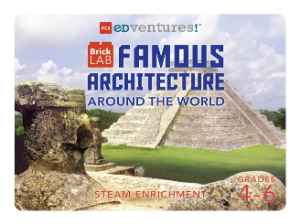
Annette Um, that was really cool. The greatest thing that I do love about the Brick Labs is because it really does simplify the number of bricks that are being used. I mean, there's only like with the brick labs, there's only, what, eight? There could be eight or nine types of bricks. We're just looking at two by twos, two by fours. Three, six, eight, ten. And then the bigger bricks. That's it. So it really simplified it as far as like, you know, they're used to bricks and all. Kind of like specialized ways and specialized sizes and all these like they're looking for one specific brick. Whereas this program kind of made them think outside the box a little bit. You only have these eight bricks that you're going to try and build with, which was kind of cool. The colors were really cool. I wasn't expecting that many colors, but they were all in and just the way that the curriculum was created that they can look at because I've got enough booklets so the kids can look at booklets that it was explained in a simple manner that any of my kids, no matter what age group they were in, could follow some of the directions on their own so I can let some kind of go crazy and some that need more help. I can give them the help that they need.
Staci So walk me back to the very first lesson. How much prep did it take you to get that first lesson up and running?
Annette Um, not a whole lot of prep, really, as far as, like just pulling things out and making sure that they were available to the kids and kind of going through to figure out, okay, what's what's the best setup? Um, at first it was like, oh, how many bricks do I need? Because like, usually we set up in tables and so there's usually four kids at a table. So the biggest setup was probably okay, how many bricks do I need to have at each table? Um, in order for there to be enough bricks for them to build up what they want to. When I did it the first time, um, they could build whatever they wanted. Like, they could kind of go through and find an architecture they liked. And for some of the older kids, I even had other books of famous architecture, just pictures that they could kind of like, use as a guide to kind of build their own architecture. Um, and I'll say I built something as well, my own architecture thing, and so did my assistant. She built the Dodger Stadium because she likes baseball. So she built a Dodger Stadium out of the bricks. So it was kind of fun to just let them loose and explore because this was a whole different build for them. We've done open builds before where they have a little display case that's only for displaying bricks, things that the kids have built with bricks. But these were different bricks. This was kind of a different type of experience to kind of simplify some of their builds and think about them a little bit more.
Staci Okay. And what was kind of the vibe in the room? What were some of those things that kids were saying? Were there any specific buildings of, you know, regarding the famous architecture that they got excited about anything that they were talking about, any of those little conversations that maybe you overheard as they were working on their bills?
Annette I would say the most popular build that day was the pyramids. For them to kind of learn to figure out how to put them together, to build the pyramids, because they were the most familiar with to figure out how the builds were. And we did have some frustration with the bricks while we were building with them. Um, but they were able to figure out how to put them together. And they got excited, we're like,” oh, it actually looks like it”. Or, you know, figuring it out, they realize, okay, obviously there's not going to be all the detail and everything, but that's okay. It was neat to see them building with the bricks in different ways than they have before. Usually when we've had our open builds, they build mostly like scenery scenes. They hadn't done a whole lot of architecture, like building buildings. So it was cool to watch them, figure out the correct way to build a wall for some of their buildings, which is one of the things I'm most excited about. These bricks is talking about overlapping and how to, create some more of these, architecture things that they haven't done before, as I've noticed from other from some of our other open builds, um, how to build a wall so it stays up when they build other things around it to give it some support and things like that. So they were excited as they would try to like, look at a picture, because some of them took the challenge of looking at a picture of something else and trying to build something similar. And they were excited when it was like, oh, that's how they go together. Or kind of experimenting with how to make it look better or more like the picture that they were trying to copy.
Staci Any other aha moments regarding even learning about the history of some of these buildings or anything like that.
Annette We talked about the history a little bit. I'm like, “hey, this is something, really different.” I said, usually we just do complete open builds and I only give like every once in a while, I'll try to say, hey, try and build a building, that's this, or try and build a building, you know, try and build a build that looks like this. So this was their kind of first time that I was like, okay, today we're going to do a specific type of build. We're going to do architecture builds, which at first some of them were kind of pushing against it a little bit because usually they're like, “oh, we have open build.” I'm like, yeah, we're going to try something different today. So it took some of them a little while to think that they could build something like that. We didn't go through too much of the history, but it was nice that it was just included, because there were a couple of them that I was able to like, hey, let's look at the pyramids to talk a little bit about them. And that information was already there, as opposed to me having to learn all that information or had resources on the back burner also to be able to like, provide that. So we did talk about the pyramids. We did talk about them looking at the pyramids of Egypt versus the buildings in South America. You know, how they're similar, but how they're a little bit different and how they could build an Egyptian pyramid versus the ones in South America.
Staci Mayan.
Annette Yeah. The Mayan ruins type thing, you know, for them to look at how they were different, how they could make sure theirs was a pyramid and not the Mayan ruin, you know. So we talked about it kind of on the side as they would kind of like pick one and start building it.
Staci Did you notice any changes in their confidence or excitement after being involved in this type of activity?
Annette Definitely their confidence in building something different that they've never tried to do. I know a lot of them have some internal structure as they're building them that the kids would not have known from just looking at a picture of a completed build to realize some of the internal structure and building techniques to go into it, which is what I'm really excited about. Helping the kids learn some of these more advanced buildings with bricks than, you know, oh, we just build the outside structure. I'm like, but we need a little bit of, you know, internal structure. So it stays so it, you know, the build works in the end. So I'm excited about that portion of it as much as the architecture builds. But the methods that they get to learn as they're building them.
Staci Perfect. And then compared to, um, piecing all the different parts together on your own and sourcing, you know, the bricks or, and then, you know, creating your own curriculum, like how much of a time saver do you think a program like this, um, has served you.
Annette Oh, so much of a time saver? And that's how I actually originally came across your program because I do architecture in my STEM programs. We do a lot of like how to build bridges and some of those things. And so I had originally just come across one of your programs as I was looking for how to use bricks to build architecture, but I can't have these really complicated builds because that's not what we have the time for. And we don't have the supplies for really complicated architecture bricks for builds. So that was when I originally saw the famous architecture one, and I think I did like a preview or a sample that I was able to get to see what was in your curriculum. And that's actually was like, oh, that's perfect, because it was already simplified. It was already all there. It was already all put together, as opposed to me trying to do a build and find all the information on my own type thing. So yes, huge time saver. Yeah, that's how I found you in the first place.
Staci Awesome. And you've already spoken a little bit about the durability of the materials, but as far as like being able to reuse, um, the bricks and the curriculum and things like that moving forward, is this a program that you feel like you could get a lot of use out of moving forward?
Annette Oh, absolutely. I'm like, as it is, I'm already like, you know, we're creating a set with like the ten different bricks and kind of ten different bags, knowing that bricks will get mixed up in the bags as we take them to different outreach. But then we figured, oh, every once in a while we'll just kind of like redistribute the bricks so that kids have access to all of them. But yeah, because I used it in my program here and I've got I'll be using it again for when we do different types of builds. Um, and I do a lot of outreach in the elementary schools. And because of the way that it's organized, I could easily take it to whichever age group that I'm at because I do kindergarten through sixth graders and outreach, and it works for all of those age groups, especially most kids love to build with bricks. So it definitely reaches those demographics as well in all different age groups. We've got a lot of copies of the booklets, which are high quality, you know, the pages are nice. It's in a spiral bound, which is good. Um, to be able to allow all the different age groups to work with it, and it will and it will last because they, they will get a lot of use this, this coming, this coming fall. I already know so but excited for how much I'm going to get to use them.
Staci Yay! That's awesome. And then have you found any other ways to adapt it. So besides using in all these different environments, is there any specific way that you'll adapt the curriculum to, you know, be customized to these different learning environments, maybe even when you're using it in a library versus when you do these outreach programs in elementary schools. Will there be a different method on how you go about, um, the kids diving into some of these builds?
Annette it'll be different in the number of kids that I have. For instance, when I will do this for second and third graders, I'll probably have sixty kids in a room. And so it will probably more just be self exploration. I also have another outreach where I have just sixth graders and I will have just like ten sixth graders. And so in that type of setting, we'll get to talk more about the ancient, the buildings, more about some of their history. How are we how are you building? How are you building a sturdy wall? You know, the internal structure. Some of those things in smaller settings, that I'll get to do. So it kind of is the number of kids that I have and how much time they have. If I only have twenty minutes, that'll be different than if I have forty five minutes and we can kind of slow down and talk about things as we go and things like that. But I think it works for either one of those settings that I'm in.
Staci That's awesome. And then what about any lifelong skills that kids would take from this particular program. Like what are some of those things that they'll learn and they'll kind of remember forever?
Annette one of them always is the whole thinking outside the box and problem solving. I love that the bricks are simple, like, there's not that many bricks. So it's causing some of them to like, oh, normally I would have all these other varieties, but now I have to kind of like redesign how I've thought about it or how to problem solve in kind of a new way. And I think that anytime that kids are kind of forced to be a little creative, you know, where not everything is spelled out for them is good because even though like they have the instructions on how to build this one type of thing, how can they make it better? Better? How can they make it bigger? How can they make it, you know, stronger even? Um, how can they use these little things? And a lot of them started with one build and they finished that one, and then they're like, oh, I know how to do this part, so now I can try something else. So then they would take the knowledge they had just from there one little thing and build something bigger. Um, right afterwards using the knowledge they had just learned. So I think anytime that we can encourage kids to be creative and kind of like use their own, you know, use their own thoughts and their own skills to try and build something that's, you know, one of those soft skills that we take with us forever.
Staci Excellent. Yep. Always thinking outside the box. It's always a good skill to have, that's for sure. Is there anything that I haven't asked that's been kind of on your mind of anything else that you'd like to share regarding this program?
Annette I know that I've already shared a couple times how I love the fact that there's only nine types of bricks. It really is, having them having to simplify it down to those nine bricks, I think is wonderful because it is taking this whole brick building that I think this generation has done a lot, but doing it in a different way, because as I look at the bricks that they're dealing with, they don't sell these two by two and two by. They don't sell the bricks this way anymore. Like they don't even build this way anymore. Most of their kits are little, teeny tiny bricks, and they don't get the big bricks anymore. So it's nice to see them be able to build big structures And you know how big they can get them and how sturdy they can get them. And simplifying things a little bit, you know, going back to some of these basics and teaching, oh, we should overlap the bricks. And that makes a stronger wall. You know, those type of conversations which they've never had before. So I truly do love the simplified brick counts.
Staci So Annette, about another area that you've been able to use this program and kind of adapt it to a different set of needs. Can you speak to that?
Speaker 2 Sure. So we've also looking forward to using these programs with some of the other demographics that we have at our library. So at our library, we have a program that we do for young adults that are neurodivergent. And we also have a program that we do for adults that are, on the other side that are having memory loss issues. And so we're kind of excited to use these bricks because they are simple bricks. They're easy to handle. They're easy to manipulate with those two groups as well. We do have some outreach that we do at some senior centers, and being able to take these bricks to those in those situations as well. Will be exciting to see that they're able to manipulate these bricks as well and kind of remember some of those, you know, some of those experiences they had building with bricks and being able to see their excitement to do some of these activities also.
Staci I love that. Thanks so much for sharing that. I'm excited to pass that on to the other team members. And it's just an area where I don't think anyone has really even thought about using, you know, some of these programs, um, within that community. And I can see how it would be very beneficial. So thanks for sharing that.